
Product insights ·
Buying pine cat litter: specifying a non-clumping variant
Emily pets editorial team
When adding pine cat litter to your range, start by clarifying the specific variant. Material, cleaning procedure and pack size need to work together. For buyers supplying the German market, an exact specification is more useful than a general promise about wood litter. This article explains which details to gather before sample approval and ordering.
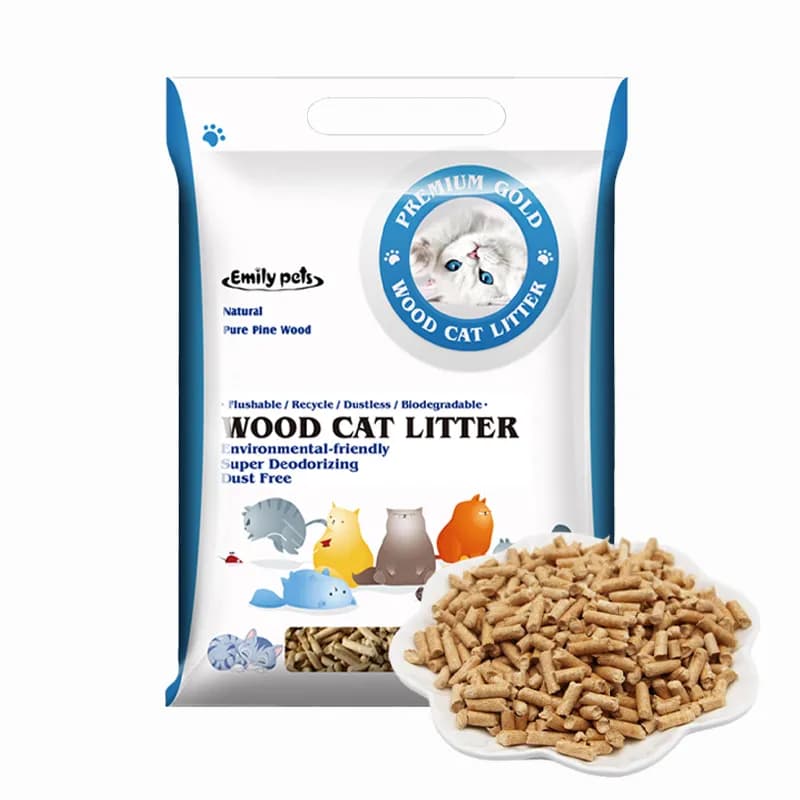
1. Treat non-clumping as a distinct product characteristic
Our product data lists pine cat litter with pine as its material and a non-clumping format. Do not transfer instructions for clumping bentonite or tofu litter to this variant. Ask for the intended cleaning procedure and recommended containers for the specific product.
Request the particle shape, dimensions and behaviour when exposed to moisture. The material name alone does not define these characteristics. Compatibility with a particular sifting tray should also be checked using the actual litter and container. Record confirmed details in your item specification.
2. Record weight, volume and shipping dimensions separately
The Emily pets catalogue lists 4, 8, 15 and 25 kg packs. Confirm which sizes and packaging formats are available for your inquiry. A weight specification cannot reliably be converted to litres without additional product data.
Shelf space and handling matter for specialist retail; shipping cartons and parcel weight also matter for online sales. Request bag dimensions, units per outer carton, carton dimensions and pallet data. Compare price per kilogram alongside the product scope and confirmed delivery terms.
3. Assess samples during filling and cleaning
Create a short handling procedure: open the pack, pour a defined quantity and document the structure. Record visible fines, foreign material and packaging condition. Use the same container and quantities when assessing multiple samples.
For moisture handling, agree the test liquid, quantity, waiting period and assessment method. Observe how the specific variant changes and how it is removed using the intended procedure. A demonstration without defined conditions does not establish a particular absorption capacity or guaranteed usage duration.
Keep a labelled approval sample. Agree which characteristics the delivered goods should meet and how deviations will be recorded. This provides purchasing and incoming-goods inspection with a shared reference.
4. Prepare clear private-label packaging
German packaging should clearly identify the material, non-clumping format and fill weight. Match the instructions to the confirmed variant. Avoid performance, origin or certification statements for which suitable evidence is not yet available.
Disposal instructions must also suit the product and target market. Wood as a material does not by itself establish suitability for flushing, organic waste collection or composting. Confirm the instructions before approving print files.
For OEM, your specification and design form the starting point. An ODM discussion develops the product and packaging concept together. Confirm bag format, print files, labelling and sample approval; minimum quantity, cost and timing are agreed per project.
5. Build the inquiry around a specific variant
Specify non-clumping pine cat litter, Germany as the target market, your sales channel, required pack size and planned quantity. Add handling, packaging and sample assessment requirements. State outstanding questions explicitly.
Request a specification and quotation with a clear scope of supply. Our product page introduces the listed line. Final configuration, packaging and availability are confirmed through discussion.
What to include in your pine litter inquiry
- Non-clumping variant and required particle shape
- Target market and sales channel
- 4, 8, 15 or 25 kg pack size for confirmation
- Planned quantity and delivery location
- Sample criteria and use instructions
- Private-label print files and packaging requirements